Half-Lash Surprise Reaction Leads Into an Adhesive Test
A lash-adhesive demo opens with a product flash, then a wide-eyed half-lash reaction that turns a visible makeup mismatch into humor before a hold test.
Brand & product
Unbranded product
- Product
- black and pink lash adhesives
- Category
- Makeup
- How it appears
- Shown, used, on screen text
Unbranded product
- Product
- false lash clusters
- Category
- Makeup
- How it appears
- Shown, used
- Niche
- Makeup
- Made for
- False-lash users interested in lash adhesive comparisons and hold demonstrations
The first 3 seconds
- Visual
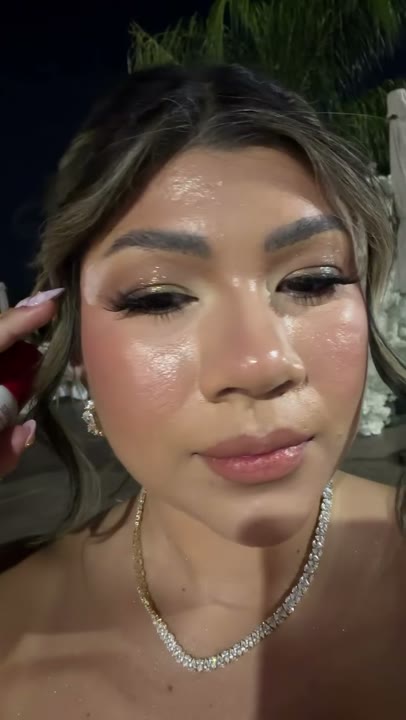
- A brief close-up shows lash clusters, tweezers, and black and pink adhesive drops on a hand; it cuts to the creator in a car, widening their eyes and mouth to reveal dramatically uneven lashes.
- On-screen text
- “Black Pink”
- Spoken line
- No speech in the opening
- Sound
- The prior analysis reports a gasp and loud laughter without spoken commentary; the supplied transcript does not cover these opening sounds.
Script beats
- 0–0.5sFlash of two adhesive colors and lash clusters arranged on a hand.Introduce the product comparison before the reaction
- 0.5–1sCar selfie shifts from a relaxed expression toward surprise.Establish a rapid emotional change
- 1–4.4sThe creator opens their eyes and mouth wide, then laughs, emphasizing one heavily lashed eye beside an apparently bare eye.Make the asymmetry immediately legible and humorous
- 4.4–7.38sReturn to the hand demonstration, dispensing adhesive and handling a lash cluster with tweezers.Connect the beauty hook to a concrete product process
- 7.38–12.3sTwo sets of lash clusters are arranged above the labeled adhesive drops; the tape holding the drops is removed.Set up a side-by-side comparison
- 12.3–17.21sTweezers manipulate the attached lash clusters.Show a visible check of adhesion
- 17.21–22.13sA brush works foamy material over the lash clusters.Add a visually understandable durability challenge
Why it works
- Expressive reaction. The sudden wide-eyed, open-mouthed expression supplies an immediate emotional cue before viewers need product knowledge.
- Visible asymmetry. One dramatic lash makes the two eyes look noticeably different, giving the reaction a clear visual joke.
- Reaction-to-proof transition. The humorous opening leads into application and hold checks, giving viewers a practical reason to continue.
How to adapt it
- Visible comparison. Show mascara on one eye, brow gel on one brow, or styling cream on one half of the hair.
- Reaction performance. Start relaxed, notice the difference in the phone camera, then use a brief gasp or amused double take.
- Product proof. Follow a brow-gel reaction with a brush-through test, or a lipstick reaction with a visible cup-transfer test.
- Filming location. Use a bathroom mirror or bedroom window for the close-up, then film the demonstration on a nearby tabletop.
- Keep intact. Make the uneven result obvious in a tight close-up; Move quickly from a calm expression to an animated reaction; Keep the reaction brief enough to reach the demonstration promptly; Follow the joke with a clearly visible product test and result.
The pattern
[Brief product flash] → [neutral selfie] → [surprised reaction to one-sided result] → [product comparison and stress test] → [visible hold payoff]